
Indoor Rowing News
Why Rowing Slower Can Actually Make You Fitter
Capping your stroke rate doesn't make a session easier. It forces more power into every stroke, and it's the base elite rowers build their whole season on.

The power of slowing down
Watch someone new to the erg and you can predict the mistake before it happens: the number on the screen starts climbing, so the arms and legs start flailing to keep up with it. It feels like effort. Mostly, it’s noise.
Elite rowers train the opposite way. For most of the year their stroke rate sits low, capped well below what feels like “working hard”. Not because it’s easier. Because a slower rate forces something a fast one lets you avoid: real power, generated properly, on every single stroke.
What a capped rate actually demands
Capped stroke rate training means holding your rate down, typically between 18 and 24 strokes per minute, and refusing to let it climb even when the split tempts you to add strokes instead of power.
Don’t confuse slower with easier. With fewer strokes to work with, each one has to generate more power to hold your split or wattage, which means more force through the legs and a recovery you actually control instead of one you’re just surviving. You end up rowing on technique, not momentum: every stroke has to earn its place, and that’s where the fitness gain actually comes from.
The stroke is a swing, not a sprint
Here’s the part most people miss, and it’s not really about rowing. It’s about timing.
Push a kid on a playground swing at the wrong moment and half your effort fights the swing’s own arc: you shove just as it’s already swinging back toward you, and the energy cancels out. Time that same push to the top of the arc, right as it pauses before falling away again, and a small push sends it higher without much effort at all. You’re not working harder. You’re working with momentum that’s already there instead of against it.
A rowing stroke runs on the same logic. The drive puts momentum into the flywheel; the recovery is meant to be the flywheel keeping that momentum while you glide back into position. Rush the recovery and you’re moving against a system that’s still settling, which is exactly what checks the flywheel’s momentum and makes the next stroke harder than it needs to be. Hold the recovery out instead, roughly two to three times the length of the drive, and each new stroke lands on a flywheel that’s still carrying real speed, not one you’ve just fought to a stop.
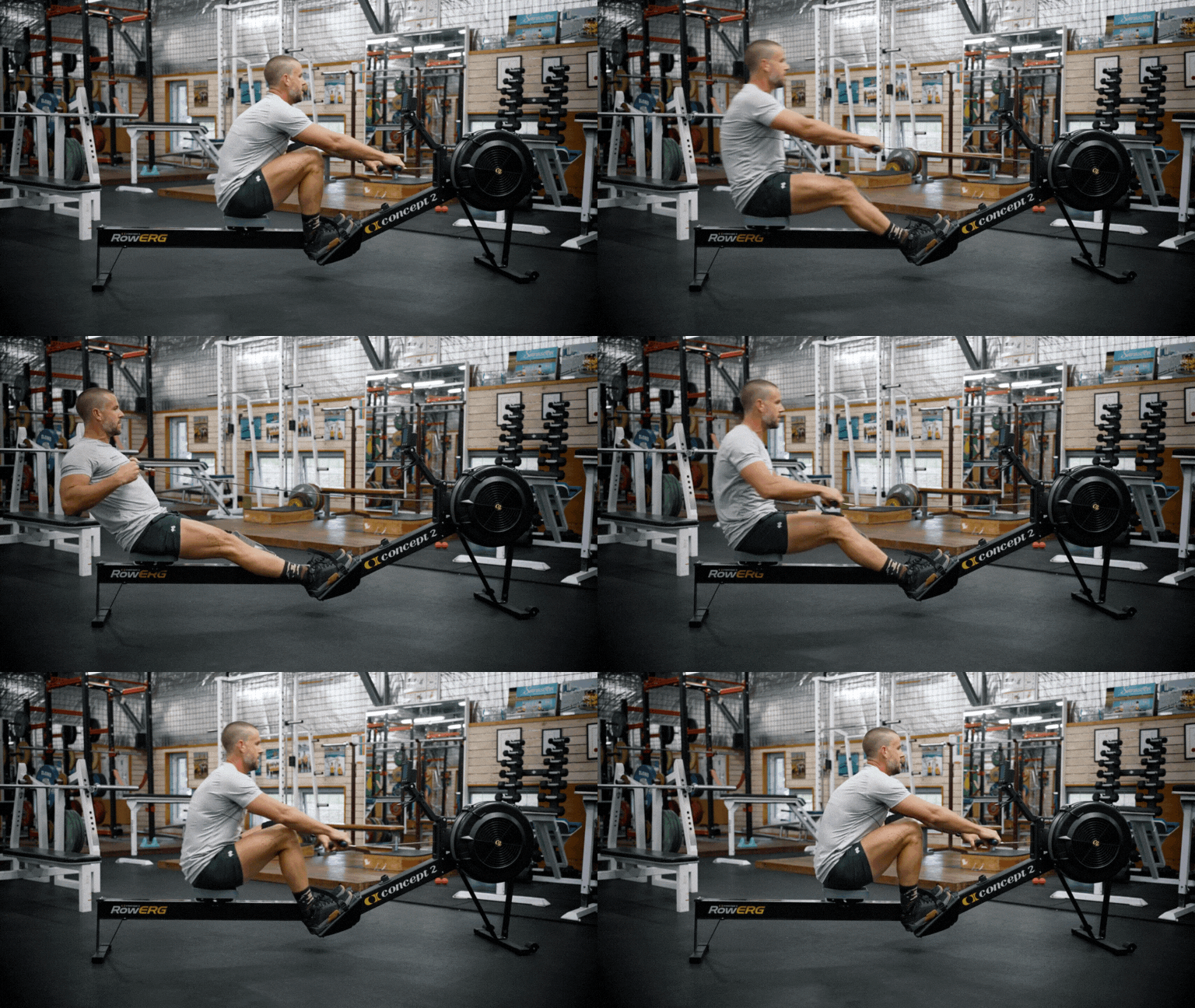
That’s what the timing above looks like in practice: the flywheel never fully stopping, because the next stroke arrives right as the last one’s momentum is still working for you.
Why fewer strokes means more power
Because the stroke count is capped, the only way to hold your split is to put more into each one. That’s the whole mechanism, and it’s why capped-rate sessions build power rather than just burning time.
Do this enough, at a rate you can’t cheat by rushing, and the wattage you can hold at 18 to 24 strokes per minute goes up. That’s what the fitness gain actually is: not a faster stroke, a stronger one, repeated more times before it fades.
It carries past the erg
None of this is unique to rowing. The same quality, force you can repeat without your form falling apart, is what separates the last five minutes of a HYROX floor from the first five, and what keeps a CrossFit WOD honest when the clock is the only thing still fresh. Running, paddling, carrying the shopping up the stairs: it’s the same ask each time, produce force, again, and again, without cutting corners. A capped rate on the erg is just a clean way to train it, because the machine won’t let you fake it with speed.
Try this: Pyramid Control Session
Want to experience what capped stroke rate training feels like? Start with this beginner-friendly workout from Row Nation:

Workout: Pyramid Control: 3 x 5 min Rhythm Build Duration: 15 minutes Structure: 3 rounds of 2-1-2 minutes at stroke rates 18-20-18, with 1-minute rest between rounds.
Each pyramid helps you:
- Develop control at low rates
- Build pressure without chasing speed
- Reset rhythm and breathing after a push
Focus on:
- Strong, grounded leg drive
- Relaxed upper body during recovery
- Smooth transitions between stroke rates
This session is perfect for learning to row with intent, especially if you’re new to stroke rate control or want to build aerobic efficiency without burnout.
The number can wait
Remember the beginner from the top of this piece, flailing to keep up with the climbing number? The screen was rowing them. It doesn’t have to row you.
Next time you sit down, cap the rate and let the split come to you. You’ll know something has shifted the day the number climbs and you don’t chase it.
Row slower. Get stronger.

Keep reading
More insights

27 July 2026
Dance class. Olympic podium. Your gym floor.
Jack Cleary's rowing story started with a knee injury that ended his dancing career at thirteen. The RowErg gave him back control and freedom long before it gave him an Olympic podium. That's why he's on the gym floor for Row Nation's Foundations workshops now.
24 July 2026
2026 NSW Indoor Rowing Series
Round 1 of the 2026 NSW Indoor Rowing Series runs 27 to 31 July. Race on your own erg or at a Row Club hub, log it through the Row Nation app, and see your name on the state leaderboard.
21 July 2026
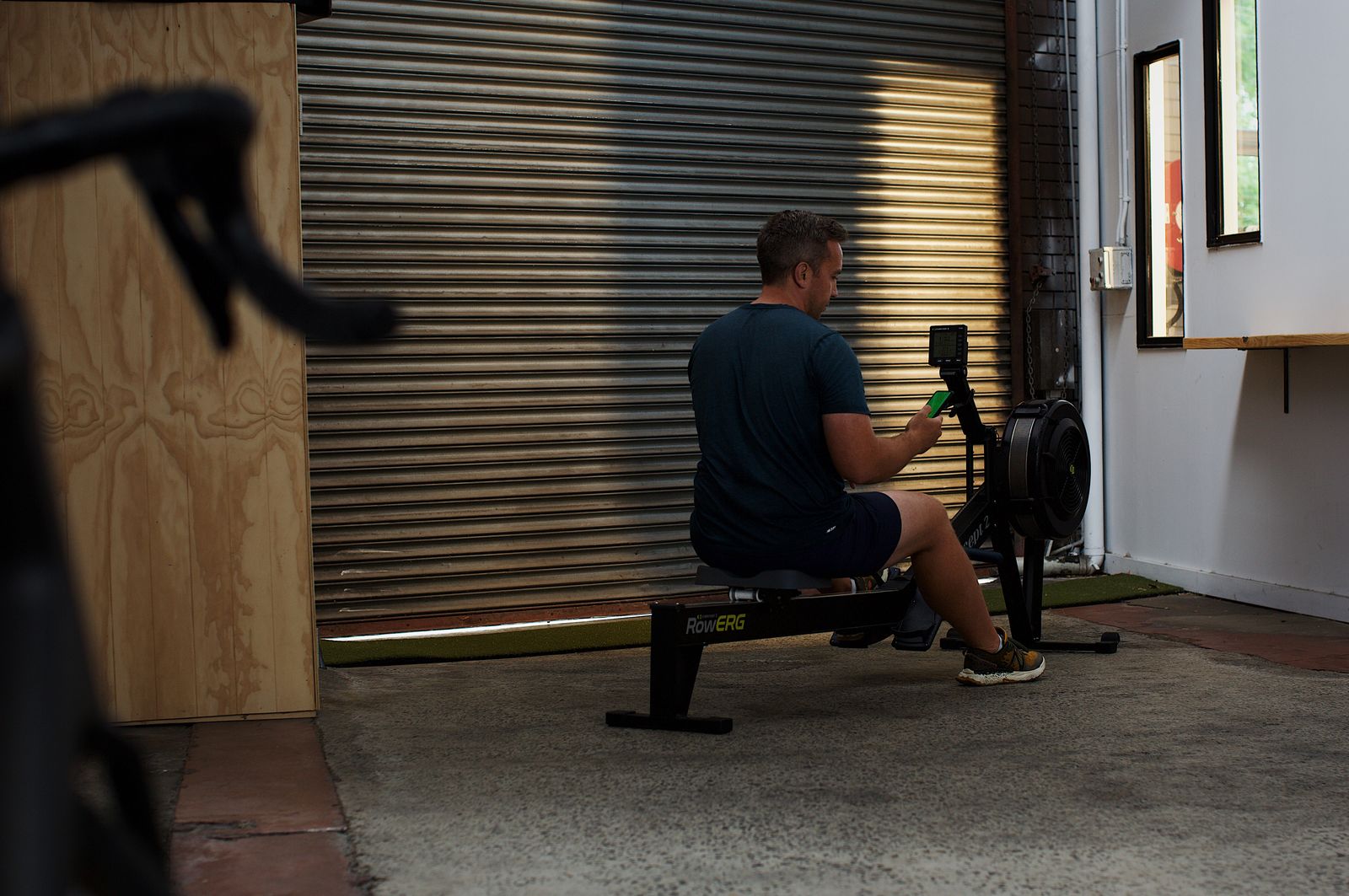
Winter is base season
Steady winter rowing builds the aerobic engine everything else runs on, and a proper base block takes exactly as long as there is until spring.