
Indoor Rowing News
How to Row Your First 2K Without Blowing Up
The 2,000m is rowing's benchmark, and the piece most people pace wrong. A simple, repeatable plan to hold an even pace and finish strong.

You feel strong off the line, so you go out hard. For two minutes it works. Then, somewhere around 750 metres, the wheels come off.
The 2,000 metres is the number that defines indoor rowing: the distance on every leaderboard, the test every coach reaches for. And it’s the piece almost everyone paces exactly that way. The good news is that a strong 2k isn’t about being fitter than you are today. It’s about spending the fitness you already have evenly.
The 2K humbles everyone for one reason
Most people row the first 500 like it’s a sprint and the last 500 like it’s a punishment. Rowing is brutally honest about this. Overspend your watts early and you pay for it in the third quarter.
The fastest 2k you’re capable of today is an even one, or very slightly negative, where the back half is as quick as the front. Elite crews barely drift from their target for 1,500 metres, then empty the tank. That’s not caution. It’s how the flywheel works.
A great 2k is boring for 1,500 metres and brutal for 500. If it’s exciting at the start, you paced it wrong.
Find your number before you race it
Guessing your pace is how you blow up. Instead, start from a number.
Row a short, hard test (two to four minutes at a rate you can hold) and note your average watts. That single number is your anchor. Row Nation’s Guide Watts Calculator turns it into target watts and stroke-rate bands, so “row hard” becomes a specific number on the screen instead of a feeling you have to guess at.
Why watts and not split? Because watts tell the truth. A split flatters you on a good day and punishes you on a bad one; watts are the same on Monday as they are on race day.
The four-quarter plan
Break the 2,000 into four 500s in your head and give each one a job:
- 0 to 500m: Settle. Come off the line under control. Find your target watts inside the first ten strokes, then sit on them. This quarter should feel almost too easy.
- 500 to 1,000m: Lock in. Hold the number. Breathe in rhythm. This is where you bank the race by refusing to speed up.
- 1,000 to 1,500m: Hold the line. The hard part: the quarter where your body asks to back off. Keep the watts flat. Don’t negotiate.
- 1,500 to 2,000m: Empty the tank. Now you spend everything that’s left. Lift the rate, lift the power, and cross the line knowing there was nothing you left behind.
Chase power, not rate
The most common mistake in the middle of a 2k is winding the stroke rate up to feel faster. It rarely works: a higher rate with a weaker pull just moves the handle more often for the same result, and it drains you. Often, rowing a little slower with more power per stroke is what actually moves you.
Hold a strong, patient stroke instead: full leg drive, clean connection, relaxed recovery. Let power, not panic, carry the boat.
Try this: rehearse the pace
You don’t practise a 2k by rowing 2ks into the ground. You practise it by teaching your body the target pace:
Broken 2K: 4 × 500m at your target watts, with 1 minute easy between each. Same number every rep. If you can hold it across four controlled pieces with rest, you can hold it across the real thing without them.
When you want that pace built into a proper plan, the Power & Pace program takes you from aerobic base through threshold to a full performance test: the exact engine a strong 2k is built on.
On the day
- Warm up properly. Ten easy minutes with a few short bursts to wake the legs.
- First stroke is controlled, not violent. You can’t win a 2k in the first 100m, but you can lose it there.
- Read your number, not the person beside you. Race your watts and let everyone who went out too hard come back to you.
Bottom line
A good 2,000m isn’t a mystery, and it isn’t only for athletes. It’s an even effort. You set the number in advance and you hold it with patience. Whatever is left, you spend in the last 500. Set your target. Hold your watts. Let the third quarter separate you from everyone who sprinted the first.
And when you’re ready for that number to count for something, register your interest for AIRO: one leaderboard, any erg, with entries expected to open in August.
Row it even. Finish it empty.

Keep reading
More insights
27 July 2026
Dance class. Olympic podium. Your gym floor.
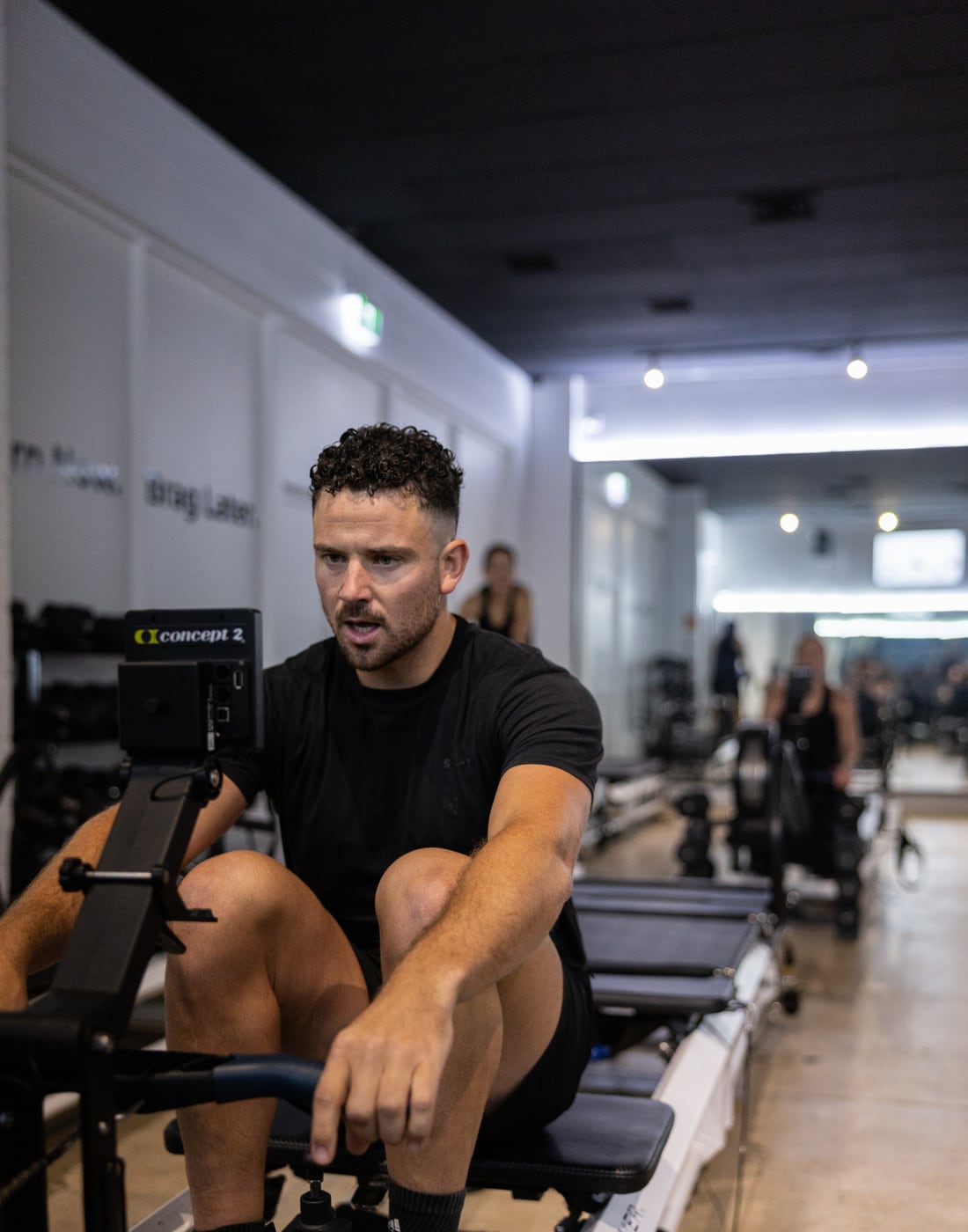
Jack Cleary's rowing story started with a knee injury that ended his dancing career at thirteen. The RowErg gave him back control and freedom long before it gave him an Olympic podium. That's why he's on the gym floor for Row Nation's Foundations workshops now.
24 July 2026
2026 NSW Indoor Rowing Series
Round 1 of the 2026 NSW Indoor Rowing Series runs 27 to 31 July. Race on your own erg or at a Row Club hub, log it through the Row Nation app, and see your name on the state leaderboard.
21 July 2026
Winter is base season
Steady winter rowing builds the aerobic engine everything else runs on, and a proper base block takes exactly as long as there is until spring.